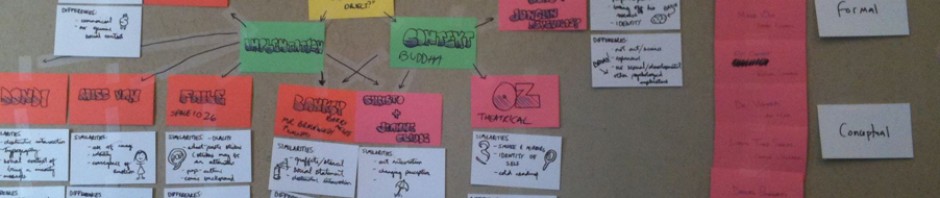
Nothing like 1000 pages defining and dissecting games and play, to make the subject seem anything but fun. Bias alert: I didn’t know any of the games referenced, having never played them. “Hate the game; don’t hate the player.” This module is going to be a stretch for me. I don’t naturally gravitate to designing games or consuming them (though I am drawn to the technology, educational aspects, etc).
Sicart
Discussion of game terminology like game mechanics, the experiential elements (goals, consequences, etc) of the game. Norman saw mechanics in mapping the user inputs to psychological and physical space. By exploring the mechanics of games you can analyze them critically and draw comparisons with other game mechanics. Finally, “rules are normative, while mechanics are performative.”
Salen and Zimmerman
Ludic = relating to play, formalized ways of being playful. The authors define play as “free movement within a more rigid structure.” Games are a part of play and vice versa. Play is often a rejection of the staid, normal, conservative, sanctioned society. Taking that one step further, transformative play can change the very society it rejects with unpredictable results. Several further definitions, the most interesting of which were: Agon, which describes fair competition like chess. Alea is when chance favors one player over another, like dice. Ilinx is like role playing, the movie “Life is Beautiful” comes to mind with the dad and the little boy role playing to escape their deadly reality. Most games combine many of these aspects of play. Breaking the rules of the game was frowned upon, equated to reentry into the real (boring) world, but with many games, hacks and cheats and creative license have become a huge part of the experience.
Huizinga
This study and series of definitions and characteristics was first published in 1938. I like it when a reading is old school ( = pre-video game.) He argues that play is extra-biological (not sure I’m 100% convinced), irrational, free, freedom, not real life. It is a temporary world in the real world, dedicated to this state/act. For some gaming is cosmic (Frobenius), or a religious high, a festival, cultural expression. That’s pretty cool…
Salen
With mobile phones, group dynamics have become a part of ubiquitous computing. Games are integrative, not just disassociated screens. The phones of tomorrow are computers that happen to have telephone capabilities; they are not designed for verbal communication anymore. The metagame occurs outside the game, what the player brings to the game or takes away. The time between games is discussed as time that may be spent working on strategy etc. I really like the game ‘Words With Friends,’ which is Scrabble. You get to take your turn and send it back to your friend to go. The time between turns could be seconds or days, which I really like. It is an ongoing game that only takes a few moments at a time to stay engaged.
Costikyan
If a game is too easy, it’s not fun. The fun is in the struggle (ironically). Even games with very loose rules (pretend, for example), needs structure so that the players understand they are playing by the same rules– “You’re dead.”
“No, I’m not!”
Endogenous, a term for the structure inside the system. Monopoly money means nothing on the street, but does endogenously in the game. Several factors are discussed that make gaming fun. My game for Tuesday deals a lot with the “fellowship” appeal of gaming and drinking games specifically. Shared experiences, providing points of contact for different people. It’s important to start designing a game with intentionality–my game doesn’t have high symbolism or meaning, but the fellowship will hopefully be satisfying.