 Csikszentmihaly
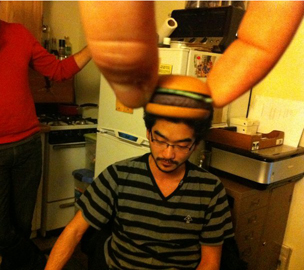
I liked the whole concept of this piece and the attention to why people want/need objects broken down into three major factors: status or a display of identity, continuity of the self (at home), symbolic of relationships. When I moved to NYC I gave up a ton of status objects downsizing, and I have a different relationship with objects now. I only value things that enable my life (basic needs) and symbolize relationships. Now, one of my prized possessions is a hamburger eraser from my best friend’s desk. I swiped it after he got laid off at my company. It’s worthless, but proudly displayed in my apartment. The attachment to such a useless object is the meaning I’ve attributed to it. Next time I’m feeling materialistic like I really want a new camera, I’m going to remind myself (that I have no money and) objects don’t define my power, beauty or existence/memory. Even though they sorta do.
Dunne
Argh, I read the extra chapter, so I’m up on my Dunne. “Psychosocial narratives†is kind of heavy, but seems to mean the societal dialogue (i.e., desire) involved in (electronic and product) design. Dunne discusses subverting the design of an object, we call it hacking, like Nam June Paik did with the TVs: I love him… 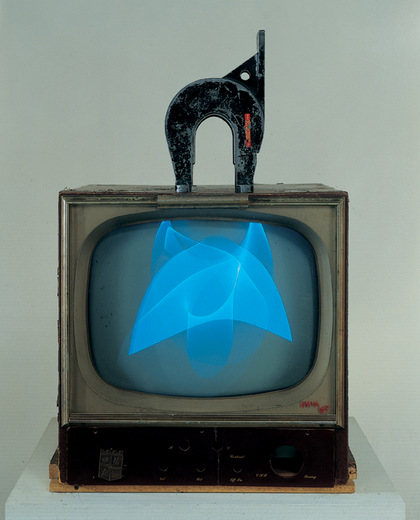 (Magnet TV image) Conceptual design is a rejection of market forces but usually references a world that reflects economic realities. Nonworking prototypes as art—my first semester final was a “what if,†so it was interesting to read strategies and concerns with this unreality approach. Showing the prototype in context will allow viewers to engage with the imagined world where such an artifact could exist.
Kirsh
Complementary strategies (organizing through external elements) can aid perception and memory and attention. These are some of the learning techniques that enable and challenge video game learning. Â Also, strategies useful for handheld paper prototypes and artifacts.
Ishii & Ullmer discuss what is lost with GUIs in the realm of physical interaction and learning. The trend seems to be still screen-based and touch screen with all the phones, plus the iPad doesn’t even have a phone. They do imitate real world hand motions, like turning a page in a book. The writers’ exploration using bricks or tangible user interfaces reminds me of the early days of computing, when punch cards or physical artifacts were required to enable a computer to do a specific task in an office. The use of graspable objects and ambient media will lead us to a much richer multi-sensory experience of digital information. by taking advantage of multiple senses and the multimodality of human interactions with the real world.
Winner
How artifacts contain political properties served two ways. One example is the democratization of the television bringing presidents to households. Sometimes the deck is stacked. Maintaining technological systems sometimes eclipses true democracy, this worries me because it has put a lot of information and power into the hands of corporate interests.