Smith
I like the quote at the beginning that interactive design is “shaping our everyday life through digital artifacts,†because I find it hard to explain that concept, but the term “telecommunications” seems dated, is there a modern equivalent (the internet?) This reading, like the Nutshell viewing, reinforces that I know very little about the history of modern interactivity. Smith writes about ubiquitous computing and the current consumer stage of electronics development (for everyone/nonexperts). “Usability as a status symbol,” I love this topic for further exploration. iPod ear buds were used this way by posers. Best example of “reassuring feedback” in screen technology was the dramatic “click†sound for buttons at the Sagmeister site. Sadly, there has been a redesign since the ones I loved…
Sharp, Rogers, Preece
This overview seemed fairly basic, but I looked up some of the examples because I thought they were interesting and funny. “Dot.com,†was that a serious site back in the day? The domain has no content currently. I want to intern at Swim. Title TBD: interaction designer, usability engineer, web designer, information architect, or user-experience designer. That Modo device is ridic: I think people would only want that as a smart phone app, rather than an additional artifact to carry. Heuristics: not sure I know what that means or how to use it for buzz appeal. From Wikipedia (from the Greek “ΕὑÏίσκωâ€Â for “findâ€Â or “discoverâ€) refers to experience-based techniques for problem solving, learning, and discovery. Heuristic methods are used to speed up the process of finding a good enough solution, where an exhaustive search is impractical. Examples of this method include using a “rule of thumbâ€, an educated guess, an intuitive judgment, or common sense. In more precise terms, heuristics are strategies using readily accessible, though loosely applicable, information to control problem solving in human beings and machines.
Winograd
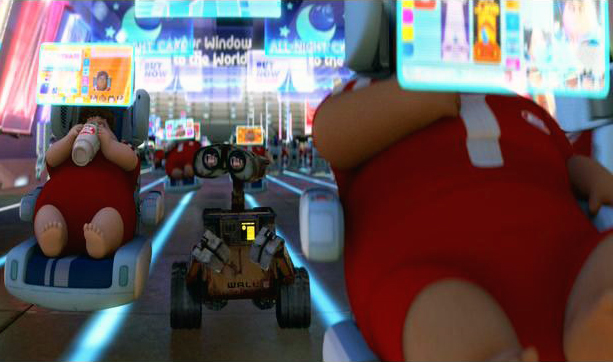 When asked to project 50 years ahead, I think the movie Wall-e got it right w/ the ubiquitous computing devices that EVERYONE is plugged into simultaneously. The author names three emerging trends: communication, habitat, and agents. This quote will be cited in a future paper: The traditional idea of “interface” implies that we are focusing on two entities, the person and the machine, and on the space that lies between them. But beyond the interface, we operate in an “interspace” that is inhabited by multiple people, workstations, servers, and other devices in a complex web of interactions. In designing new systems and applications, we are not simply providing better tools for working with objects in a previously existing world. We are creating new worlds. Computer systems and software are becoming media for the creation of virtualities: the worlds in which users of the software perceive, act, and respond to experiences. The emergence of interactive design, at this point in the reading feels a little like preaching to the choir. I agree, and I’m excited about the expanding opportunities for designers to explore the social consequences of ubiquitous computing.